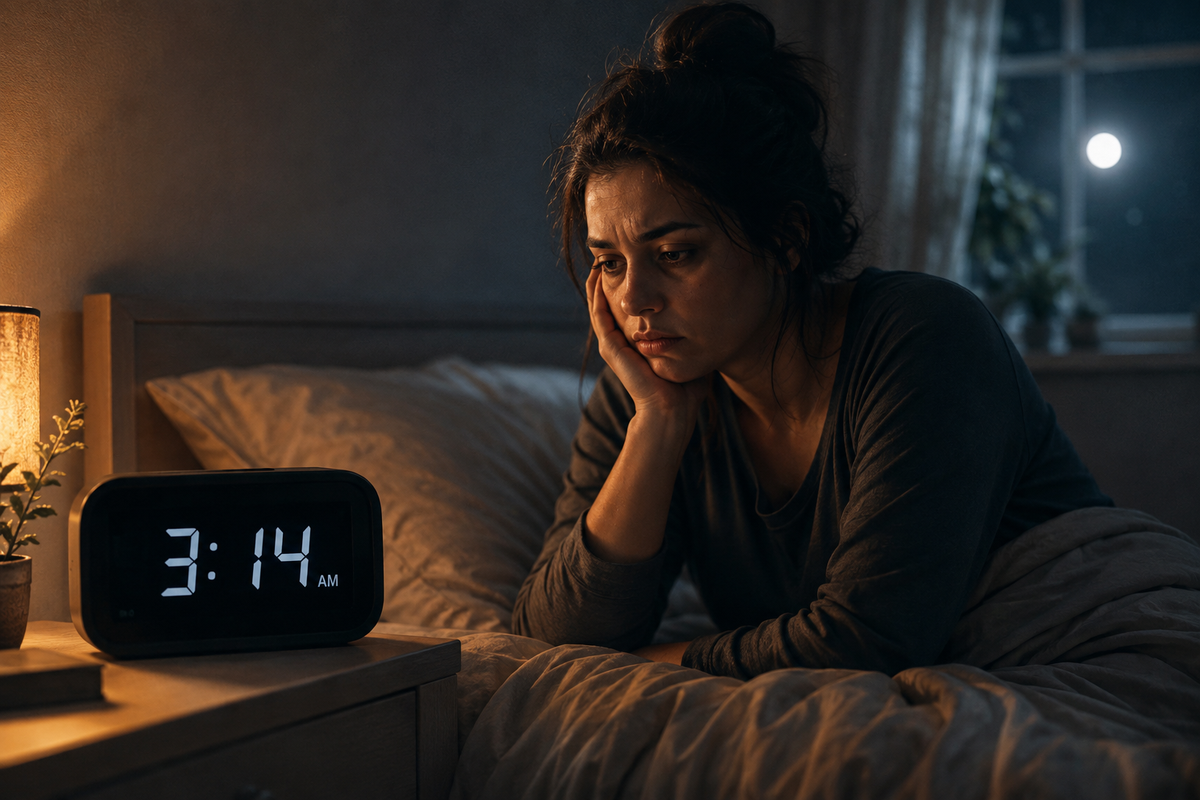
If you're staring at the ceiling in the middle of the night, exhausted but wired, it's not "just stress." It's a specific, well-documented break in your sleep cycle — and once you understand it, it's a lot easier to fix.
See What Actually Works →Free read — no signup. Full YU Sleep breakdown inside.
You go to bed tired. You fall asleep within minutes. Then, somewhere between 2 and 4 AM, your eyes snap open — heart a little fast, mind suddenly loud. You lie there doing the math on how many hours you have left. Eventually you doze off again, but the alarm hits before you feel rested.
Repeat that for a few weeks and it stops feeling like a bad night. It starts feeling like you.
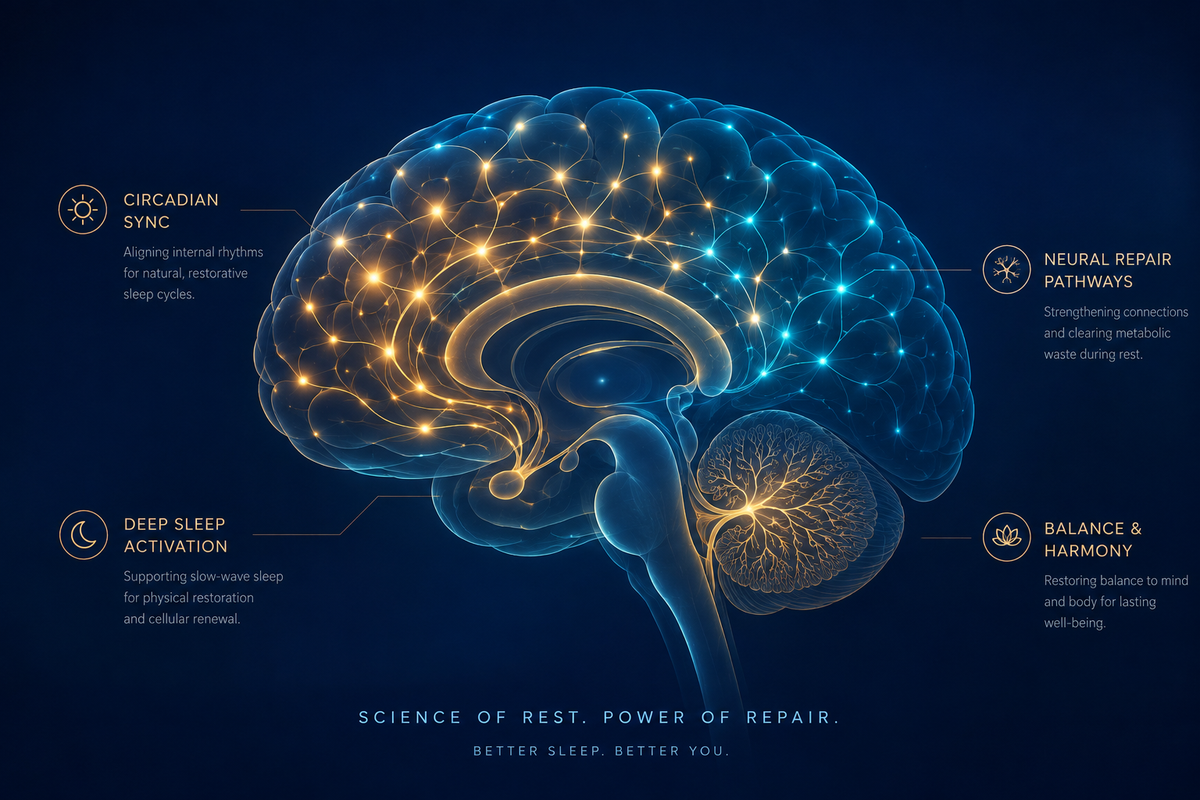
Middle-of-the-night waking is most often tied to how your brain moves between sleep stages. When circadian signaling drifts and deep, slow-wave sleep gets cut short, your brain treats the transition between cycles as a reason to fully wake up instead of rolling into the next stage.
That's why "just relax" or "put your phone away" only gets you so far — those habits help, but they don't address the underlying signaling that's cutting your night in half.
The routines that tend to work best combine three things: a wind-down ritual that actually signals bedtime to your brain, a dark and cool bedroom setup, and — for many people — a sleep-support supplement designed around the circadian and deep-sleep mechanisms above, not just melatonin and a sedative herb thrown together.
That last piece is what readers ask about most, so I put together a full, honest breakdown of one — what's in it, what it's meant to do, and what to realistically expect.
Read the Full YU Sleep Review →
Before anything else, the room itself has to say "sleep." Cooler temperature, real darkness, and cutting blue light an hour before bed all lower the barrier to falling — and staying — asleep.
We put together a full breakdown of the small environment changes that made the biggest difference for us.
See the Bedroom Sleep Checklist →Waking up without the mental fog. Getting out of bed because you're ready, not because the alarm won. It sounds small until you haven't had it in months.
That's the whole point of fixing the 3AM wake-up — not perfection, just your nights back.
See What Can Help You Get There →